
When generated images feel inconsistent, the first instinct is usually to improve the prompt. Add more adjectives. Name a camera, a lens, a lighting style, a color mood, and a reference artist. One image may improve. Then the next one drifts in a different direction, and the prompt grows again.
The problem is rarely that the prompt contains too few words. The problem is that a prompt describes an image, while a product needs a visual system. A system must make many images feel related across different subjects, sizes, pages, and moments.
A prompt optimizes one output
Prompts are good at specifying local intent. They can ask for a close crop, hard side light, a quiet background, or a restrained palette. But consistency lives in relationships. How large should the subject feel against the frame? Which colors carry meaning? How much texture is acceptable? What should never appear? Which kinds of variation make the series richer, and which ones break its identity?
Stuffing all of that into every prompt creates a fragile ritual. Different people emphasize different clauses. Models interpret long instructions unevenly. A later prompt update fixes one symptom and quietly changes three other properties. The team has words, but not a shared way to judge the result.
A better prompt can improve an image. A visual bible can improve the decisions behind every image.
A visual bible turns taste into constraints
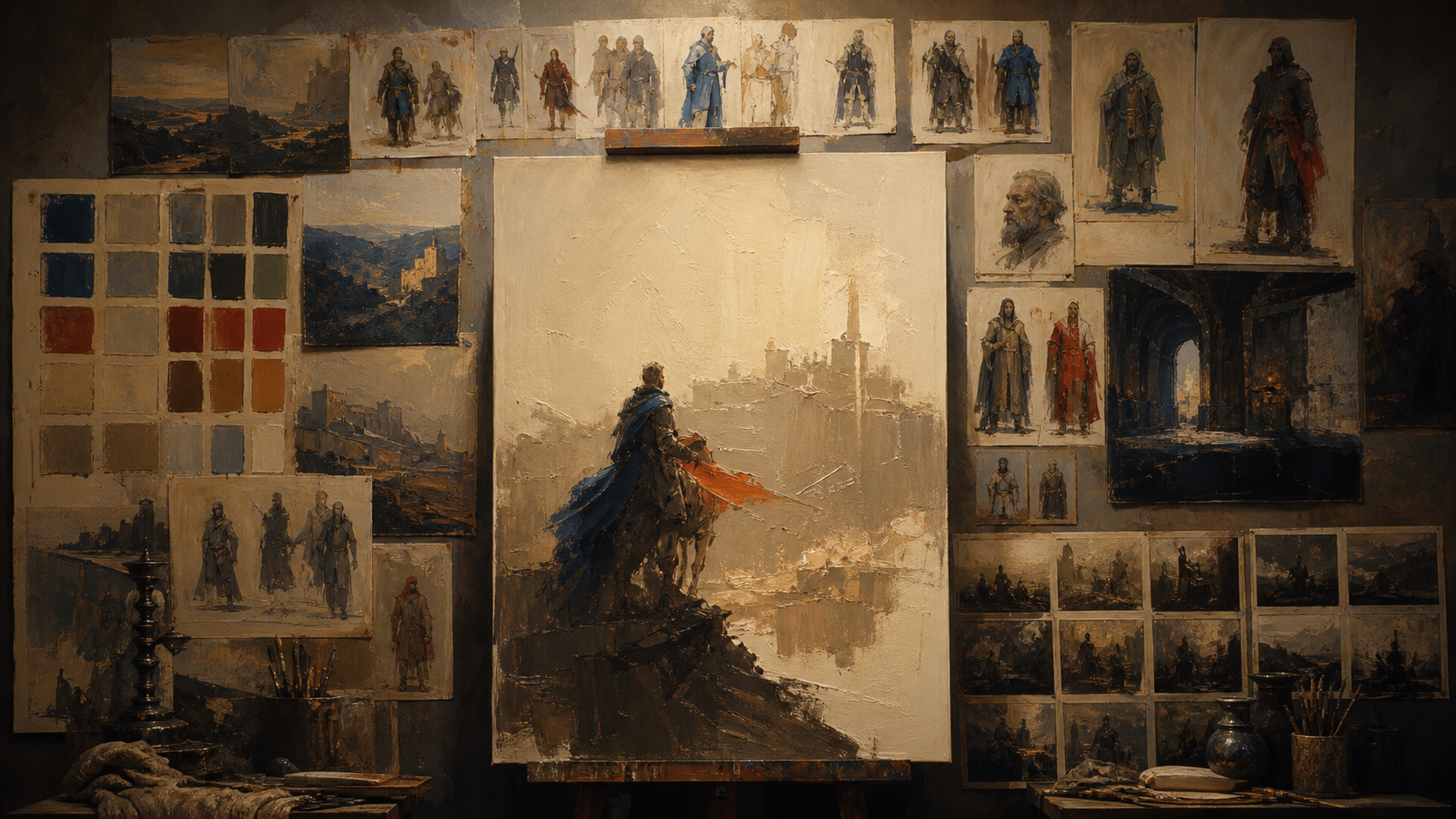
A useful visual bible is not a mood board full of attractive references. It is a compact decision system. It names the recurring composition, palette roles, lighting logic, texture, typography relationship, asset categories, and explicit anti-patterns. It also shows examples at the edges, not only the perfect center.
The anti-patterns matter because generative systems are very good at producing plausible beauty. Without boundaries, each output can look individually polished while the collection becomes incoherent. Saying no glossy gradients, no floating glass objects, or no cinematic depth of field may protect the identity more than another paragraph describing what to add.
This structure changes review. Instead of debating whether an image feels right, the team can locate the break. The composition may be correct while the texture is wrong. The palette may fit while the asset is performing the wrong role. Feedback becomes reusable because it updates a rule rather than patching one output.
Consistency does not require sameness
A visual bible should not turn generation into a template factory. Good systems define a stable grammar and leave room for expression inside it. The subject, crop, rhythm, or metaphor can vary while the deeper relationships remain recognizable. This is closer to an editorial magazine than a component library: each spread is different, but none feels borrowed from another publication.
The practical workflow is simple. Define the bible before scaling generation. Generate a small set that deliberately tests its boundaries. Review the set as a family, not image by image. When drift appears, update the shared rule and regenerate only what the rule affects.
Prompts still matter. They are how a specific image enters the system. But asking one prompt to carry an entire visual identity is like asking one sentence to replace art direction. The scalable asset is not the longest instruction. It is the shared visual judgment that makes shorter instructions reliable.